Article · material selection
Oak wood grades Natural or Rustical – how to choose?
The wood grade is an important step in choosing your dream floor, as it has a real impact on the floor's appearance, the character of the interior and the atmosphere it will create in the room.

 Nature
Rustic
Nature
Rustic
An atmosphere that you can feel from the moment you first enter the room
Wood grade determines how visible the natural characteristics of a material are—grain, shades, knots, and tonal transitions. Are you looking for an answer to the question: Natural or Rustical when it comes to oak parquet? This guide explains the difference between grading grades and helps you choose a material that suits your interior style.
Basics
What are wood grades?
In solid wood flooring, we talk about grading classes – the way boards are selected and grouped during production. This isn't about "inferior" or "superior" material quality, but about the desired surface appearance and visual character of the finished floor.
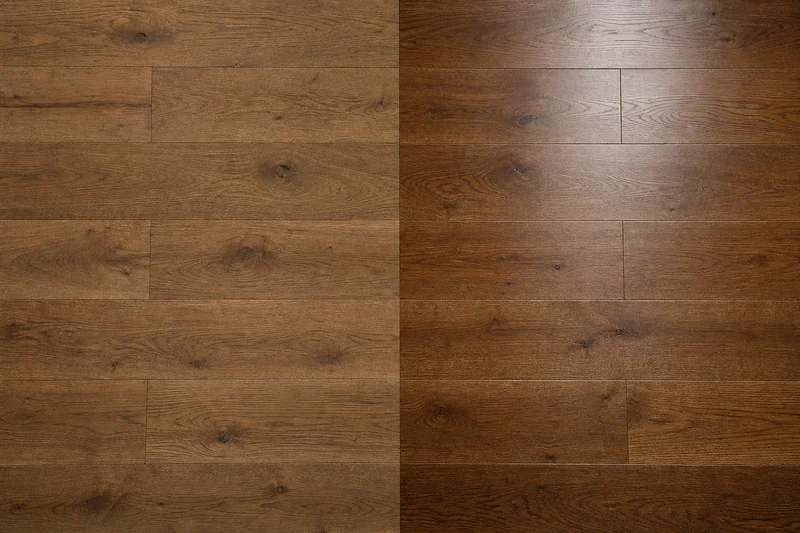
The same oak board can look completely different depending on the class: in a more selective variant, calm grain and a more even shade dominate, while in a more natural variant - more pronounced color transitions, knots and greater dynamics of the wood pattern.
Nature
Rustic
Therefore, the choice of class is not only an aesthetic decision, but also a practical one: it influences the perception of the entire interior, the impression of spaciousness and how the floor "carries" everyday use - from elegant minimalism to a more rustic, natural atmosphere.
Frequently asked questions
Does the grade of wood affect quality?
We often hear from our customers that "rustic" grades are inferior materials. This is simply not true. Grading grades don't compromise the board's technical parameters—they only change what you see on the surface.
Natural and Rustical are made from the same species of wood and undergo the same production process. They differ only in their aesthetic acceptance criteria—not in the structural strength of the material.
does not affect the hardness of the wood
does not affect the durability of the floor
does not affect the possibility of sanding
does not affect underfloor heating - if the product is intended for it
It only affects aesthetics – the grain pattern, the presence of knots, the consistency of shades and the overall character of the interior.
With underfloor heating, what matters most is whether the manufacturer approves a given type of board for this type of installation—not the grading class. You can read more about this in our guide to wooden floors over underfloor heating.
Selective class
Nature Class
If you dream of a floor that calms a space rather than draws attention to itself, Natur is the natural choice. It's a classy choice for those who appreciate wood, but in an elegant and structured version.
The color scheme is relatively uniform here—no dramatic shifts in shade between planks. Instead, subtle tonal variations emerge , adding life to the floor without being distracting. The grain is even, and any knots are small and healthy—a subtle accent rather than a dominant feature.
In practice, Natur is a floor that pairs well with light walls, simple furniture, and plenty of light. It works perfectly in designs where wood is intended to be a backdrop to the interior—not the main character.
Characteristic features
- small healthy knots (up to 8 mm)
- acceptable shine
- no surface cracks
- uniform colors
- natural grain pattern
It's worth remembering: Natur doesn't mean an "artificially smooth" floor. It's still real wood—with natural grain and subtle details. Just a more refined version, the kind most often found in modern homes and apartments.
Expressive class
Rustical Class
Rustical is the choice for those who want to feel real wood underfoot —with its natural history, contrasts, and character. Here, the floor doesn't hide in the background. It creates the atmosphere of the entire interior.
This grade exhibits larger, healthy knots, sometimes clustered together, and more pronounced color differences between boards. The grain is more pronounced, and tonal transitions are more pronounced. This is precisely the "living wood" effect that cannot be fully replicated with a smooth, uniform surface.
Rustical looks good in spaces where authenticity is key: homes with soul, loft interiors, rustic kitchens, and living rooms with natural fabrics and warm lighting. The floor becomes a decorative element—without additional wall decorations.
Characteristic features
- healthy knots up to 25 mm
- clusters of knots
- greater color differences
- permissible edge white and gloss
- minor cracks are acceptable
- a more expressive drawing
It's worth knowing: larger knots or small cracks in Rustical aren't a material defect—they're accepted grading characteristics, sealed with filler, that give the floor a rustic look. The technical parameters of the board remain the same as in the Natur class—the only changes are the acceptable surface features.
Production
How is wood sorted?
The wood grades in oak parquet— Natur and Rustical —are not created "by eye." They are the result of visual selection during the production stage: boards are inspected, compared, and grouped according to the surface characteristics acceptable for a given grade.
In other words, the same batch of wood can be classified as either Natural or Rustical, depending on the grain, shade, knots, or any cracks. This isn't a matter of different material quality—it's just different criteria for accepting appearance.
The PN-EN 13226 standard defines European rules for classifying parquet elements in terms of acceptable visual characteristics. This allows you to know what to expect from a given class—regardless of the manufacturer and production batch.
Natural material
Why is each board different?
Oak wood comes from a living tree—each trunk grows differently, in different light, and in different soil. Hence, the unique grain, color transitions, and natural details that cannot be replicated exactly from one board to another.
That's why the difference between Natur and Rustical isn't a matter of "better" wood, but rather the range of acceptable characteristics. Natur's selection is more restrictive, Rustical's more extensive. But in both cases, you're dealing with a genuine, natural material—not a print or imitation.
Surface finish
How does the finish affect the appearance of the wood grade?
The grading class is one thing, but the finishing method is another. The same oak parquet in the Natural or Rustical grades can look completely different after applying varnish, oil wax, or brushing.
A wax oil typically highlights the texture and grain more strongly—knots and contrasts are more visible underfoot. Varnish creates a smoother, more uniform surface and often softens the wood grain somewhat. Brushing brings out the hard grain and can further enhance the character of the Rustical grade.
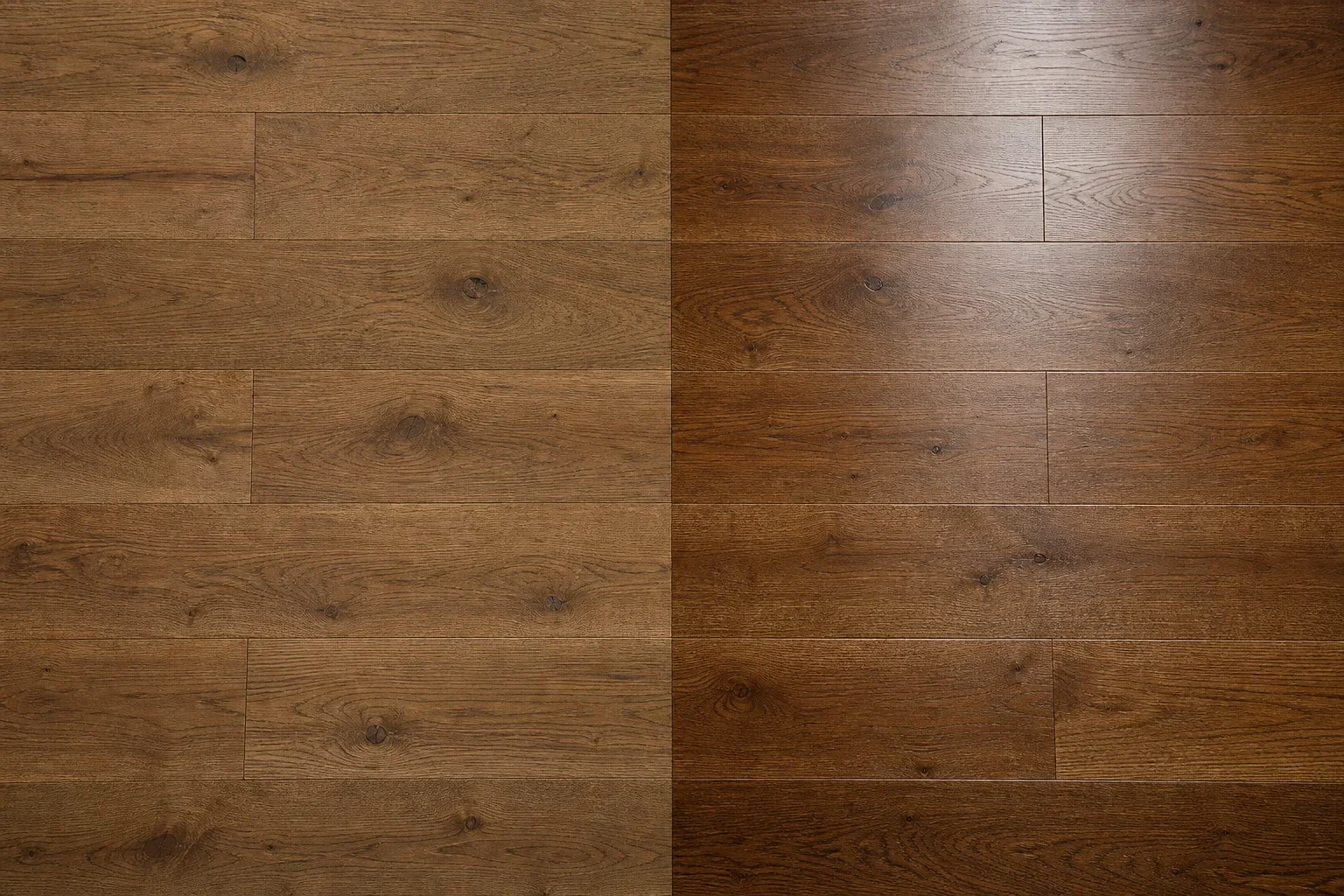
The shade of the stain is equally important . Lighter shades (e.g., bleached, beige) emphasize the tranquility of the Natural class, while darker ones—like Walnut —can smooth out the contrast of knots or give the floor a more classic, refined tone. You can read more about choosing a finish in our guides: varnish or oil wax and brushing wood .
Before purchasing
Does the product photo reflect the actual appearance?
Photos in the catalog or on the product page illustrate the nature of a given grade—but wood is a natural and living. Each batch may vary slightly in shade, grain pattern, or knot placement, within the acceptable limits for the selected grade.
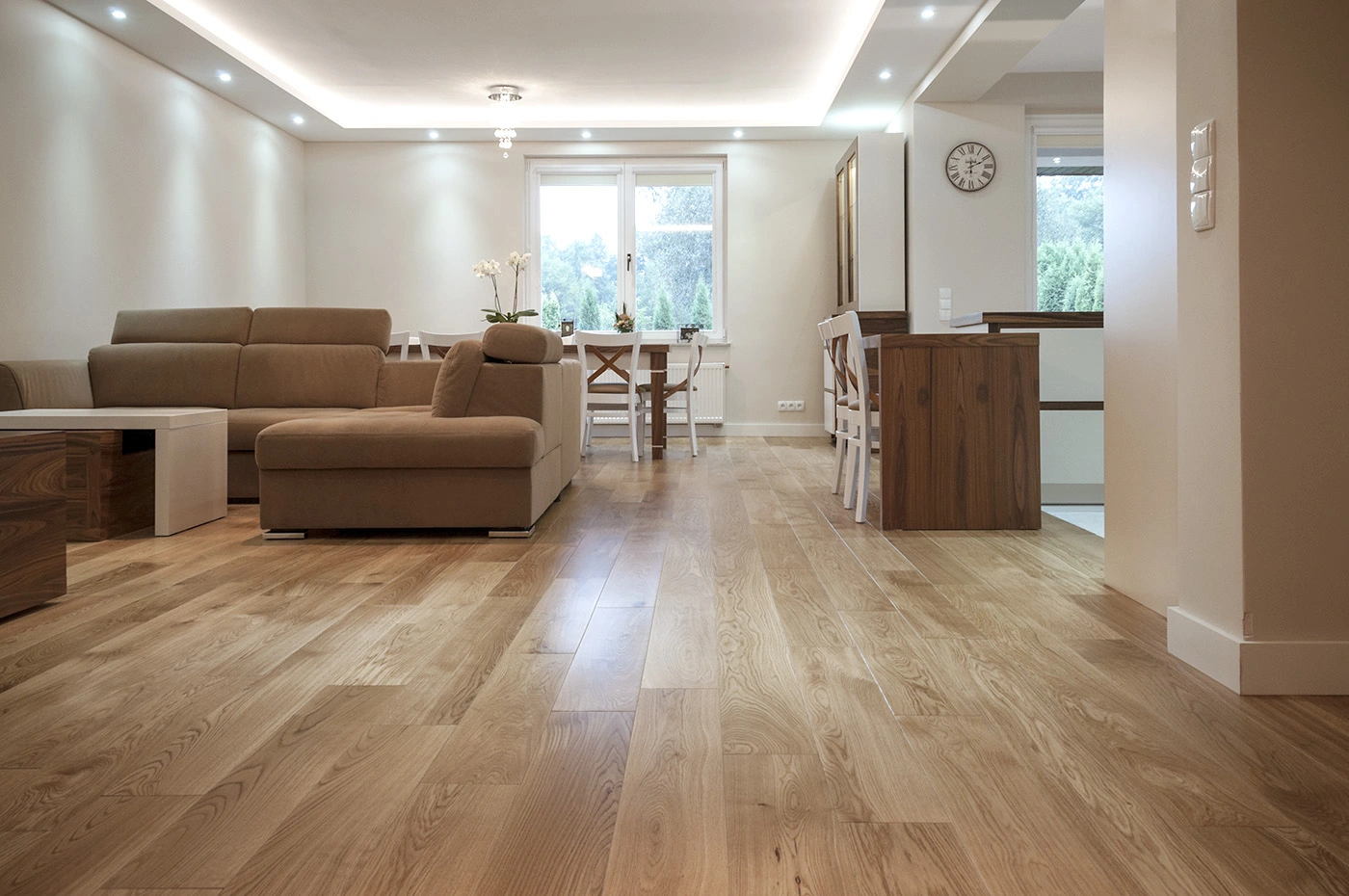
This is normal and expected—it doesn't indicate a manufacturing defect. Therefore, when choosing oak parquet, it's worth relying not only on a photo but also on a sample in your home or a visit to a showroom. Only then will you realistically assess whether you prefer Natural or Rustical parquet in your lighting and with your furniture.
FAQ
Frequently asked questions
-
No. This is just a different class of wood grading.
-
Yes, but it is still natural wood and small knots are acceptable.
-
No. Both classes have identical performance characteristics.
-
Because selection allows for greater differences resulting from the natural structure of the wood.
-
Yes, the classification does not affect the possibility of sanding.
At the end
Summary
The grade of wood is an aesthetic decision - and that is why it is worth approaching it calmly, without the pressure of "choosing the perfect one".
- The choice depends on your taste - there is no "better" or "worse" class here
- both classes are made of the same oak wood
- they differ only in the appearance of the surface and the sorting criteria
- it is worth taking into account the style of the interior in which the floor is to play the first fiddle
Natural and Rustical are two sides of the same coin—choose the one that best suits your interior and everyday space. If you'd like to see both classes in person, we invite you to browse our oak planks selection.